
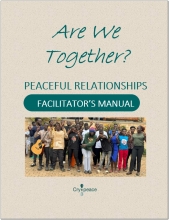
The History of "Are We Together?"
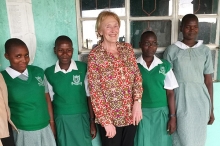 The original curriculum was spearheaded by the late Canadian peace educator, Marg Huber. With war orphans from Uganda, Marg incorporated Ugandan folk stories, the African concept of Ubuntu, with universal values, communication, and conflict resolution skills. Together, they taught over 7,500 secondary students how to collaborate and resolve conflicts peacefully, at a time when Uganda was reeling from the effects of the Lord's Resistance Army. The impact was transformative. As schools became safe havens, the students adopted the motto, "the real heroes are the peacebuilders." Marg passed the "torch" to CryPeace, and we collaborated on updating the "Are We Together?" curriculum. Unfortunately, Marg passed away before she saw it relaunched in her beloved Uganda in 2024.
The real heroes are the peacebuilders.
The "Are We Together?" Peaceful Relationships Curriculum
“Are We Together?” teaches universal values and conflict resolution skills in a fun an engaging way, using dialogue, drama, games and sharing circles. Its twelve units provide practical experience expressing self-confidence, respect, and empathy, equipping participants to resolve life’s problems cooperatively and peacefully.
Course Units
1: Peace, the Self and Relationships
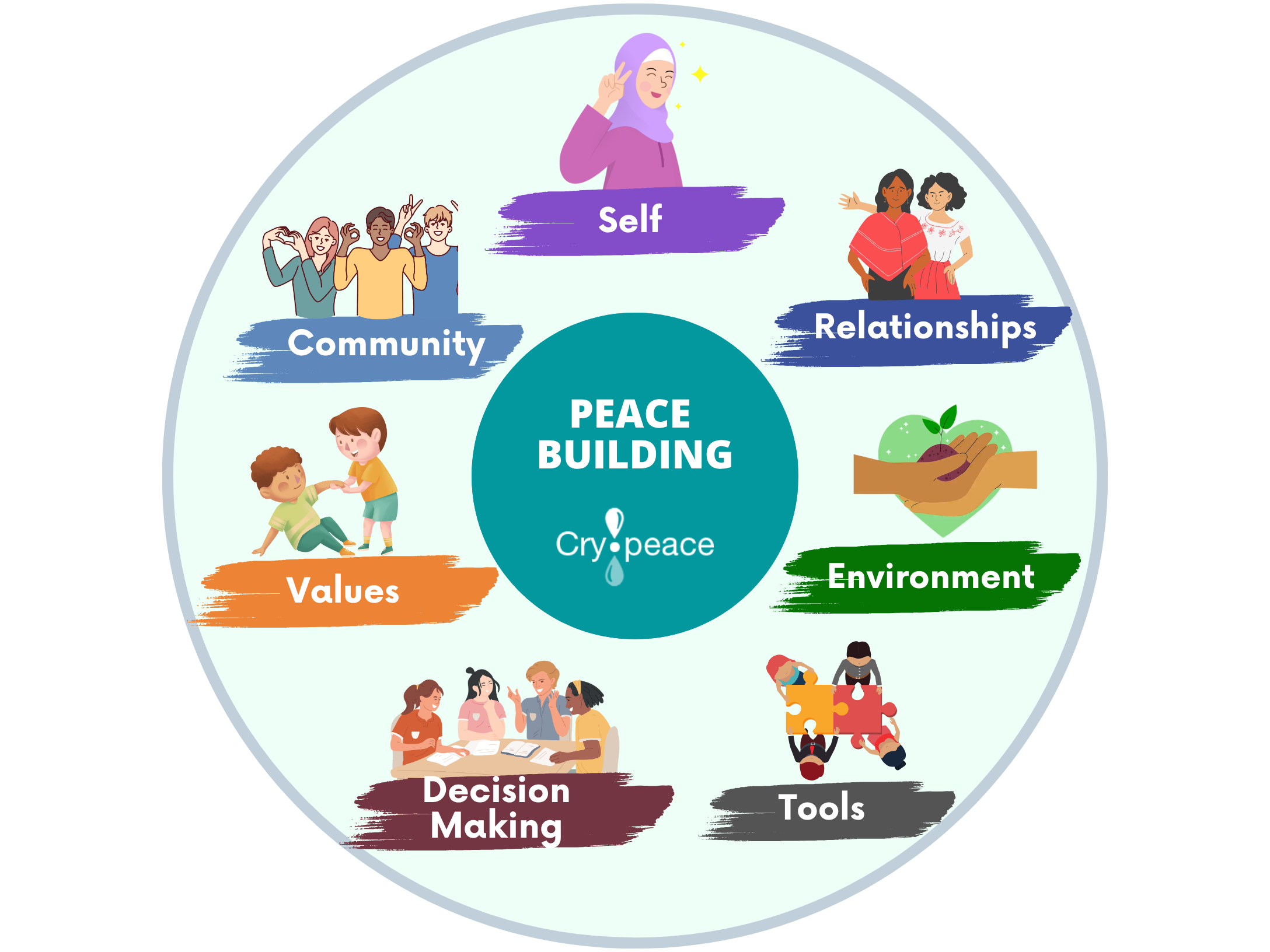
2: The Values of Love and Respect
3: Listening Skills
4: Assertiveness and the Value of Humility
5: Dialogue and the Values of Responsibility and Honesty
6: Conflict Resolution
7: Dealing with Anger
8: Non-Violence and the Value of Tolerance
9: Forgiveness and Reconciliation
10: Living in Community and the Value of Cooperation
11: Decision-Making and the Value of Unity
12: Living in Harmony with the Environment
The course includes 72 hours of interactive activities. It can be taught one to two hours per school week over two years, 90 minutes per week for 48 weeks, or more intensively during school breaks.
Why teach Peace?
Peace education is an essential, feasible, and cost-effective investment in the future, especially in countries like Uganda, where youth comprise the majority of the population. Teaching children the values and aptitudes of peaceful co-existence will equip them to become productive members of society, contributing to a more peaceful, prosperous future for us all. "Are We Together?" can make a positive contribution to this goal.
Peace Education is a Global Priority
Peace is more than the absence of conflict; it is the presence of conditions that enable everyone to thrive. The Institute for Economics and Peace (IEP) defines “positive peace” as the attitudes, institutions and structures that sustain peaceful societies. Peace is essential for achieving the Sustainable Development Goals and enabling a harmonious society.
Peace education is a cornerstone of the UN’s Vision 2030, expressed in Sustainable Development Goal 4, Target 4.7: that all learners acquire knowledge and skills for sustainable lifestyles, human rights, gender equality, and a culture of peace and non-violence. UNESCO’s 2024 Recommendation on Education for Peace, Human Rights and Sustainable Development outlines the educational changes needed to meet these goals.
Get in Touch
We would love you to use Are We Together? in your context. It is free, and we can help you plan the rollout and join a peer support network of facilitators. We are interested in contextualizing it for new regions, starting in Canada. Please contact CryPeace to get started. And, if you want to help us equip more educators to teach peace, 100% of your donation will go to implementing the Generation for Peace project.
Learn more:
- Review the "Are We Together?" Facilitator's Manual
- Read our 2-page international brochure
- Read our 2-page brochure for Canada
- Learn about our "Generation for Peace" Initiative
- Congratulations to our first graduates!
- True Vine Primary School is on fire - for peace
- Email CryPeace to become a partner in the program